
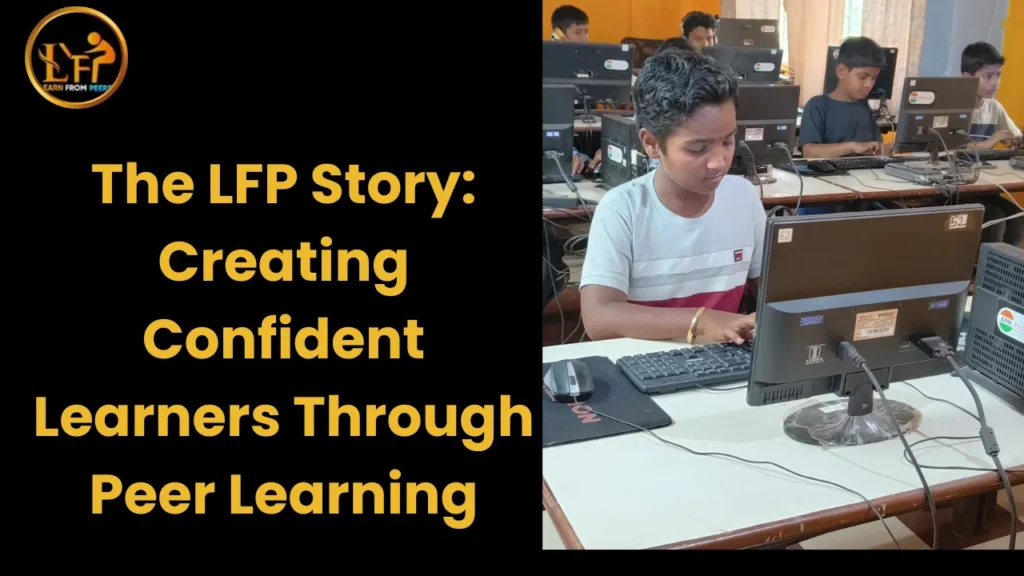
LFP: Where Learning Grows Into Mentorship
Learning is not just about gaining information; it is about building confidence, clarity, and the ability to apply knowledge meaningfully.
At LFP (Learn From Peers), education is seen as a shared journey one where students actively participate, support each other, and grow together.

LFP was created to move beyond traditional learning methods and build an environment where learners are empowered to take ownership of their growth.
LFP is not limited to classrooms or lectures. It is a learning community where students are encouraged to question, explain, and collaborate. Here, learning continues until a student is confident enough to guide someone else.
The Beginning of LFP: A Thought That Turned Into a Movement
LFP began with a simple but powerful realisation students often learn better when they learn together. Many learners struggle not because they lack ability, but because they lack guidance, confidence, and a safe space to express doubts. Traditional education systems rarely address this gap.
With this understanding, LFP was started as an initiative focused on peer learning. The aim was to create a system where learning felt approachable, interactive, and practical. Over time, this approach evolved into a structured learning model that prioritises understanding over memorisation and participation over passive listening.
The People Who Lead LFP: Learners Who Became Builders
LFP is led by Aniket Kadam, Lead POD, a motivated IT Support Technician and Computer Instructor with more than three years of experience in technical troubleshooting and classroom management.
Having worked closely with learners from diverse backgrounds, he understands the real challenges students face during their learning journey, not from theory, but from lived experience.
This understanding shaped the foundation of LFP. Instead of creating a rigid hierarchy, LFP was designed as a shared learning ecosystem where responsibility is distributed, learning is inclusive, and growth is continuous.
The focus has always been on nurturing confident learners who can guide others with clarity and empathy. This philosophy is reflected in every LFP class, mentor session, and peer interaction. Thanks to Apnipathshala
Mentorship at LFP: Grown Through Learning
At LFP, mentorship is not assigned it is developed. Students begin as learners, actively engaging in discussions, clarifying concepts, and supporting peers. Over time, those who show consistency, curiosity, and a willingness to help others are encouraged to take on greater responsibility.
Mentorship at LFP is a gradual process supported by guidance, practice, and feedback. Learners gain confidence through real exposure and meaningful participation. This ensures that mentors at LFP are not just knowledgeable, but also approachable, responsible, and deeply connected to the learning process.
Growth at a Class Level: Learning as a Community
One of the defining strengths of LFP is how entire classes grow together. Each batch begins with learners at different stages, but as sessions progress, a strong sense of connection and confidence develops. Students support each other, share perspectives, and build a learning rhythm that benefits everyone involved.
As the class matures, several learners naturally step into mentorship roles, contributing to the growth of juniors and strengthening the learning ecosystem. This collective progress reinforces the idea that success at LFP is not individual it is shared.
Conclusion: Learning That Continues Beyond the Classroom
LFP is more than a learning initiative it is a space where students discover their potential and learn the value of sharing knowledge. By transforming learning into a collaborative journey, LFP creates an environment where growth is continuous, and leadership emerges naturally.
This is the essence of LFP: a place where learning does not stop at understanding, but grows through guidance, responsibility, and community.